SPALLING REPAIR
INSPECT AND PROTECT. PREVENT LIABILITY!
Lance Luke creatively demonstrates concrete spalling in 30 seconds.


Spalling 101: Everything You Should Know
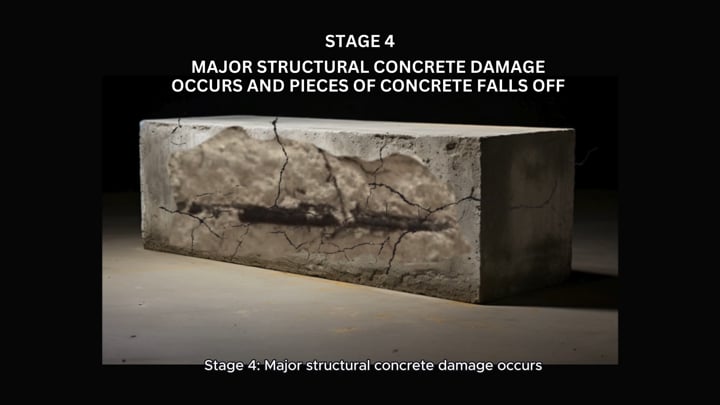
Spalling refers to the process of chipping, cracking, or breaking off small pieces from a material such as concrete, masonry, or metal. Various factors can cause spalling, and the specific types of spalling depend on the material involved. Here are the different types of spalling and their causes for commonly encountered materials:
Concrete Spalling
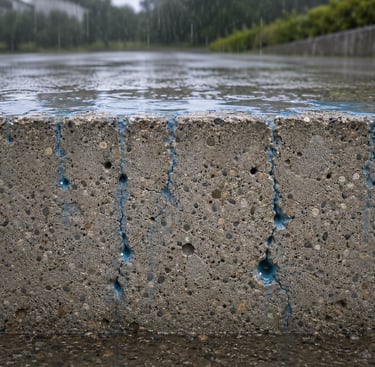
Freeze-Thaw Spalling:
when water penetrates the concrete, freezes, and expands, causing internal pressure that leads to cracking and spalling.
Chemical Attack Spalling:
Chemicals like acids, sulfates, and chlorides can react with concrete and weaken its structure, resulting in spalling.
Alkali-Aggregate Reaction:
Certain aggregates in concrete can react with alkalis in the cement, causing expansion, cracking, and spalling.
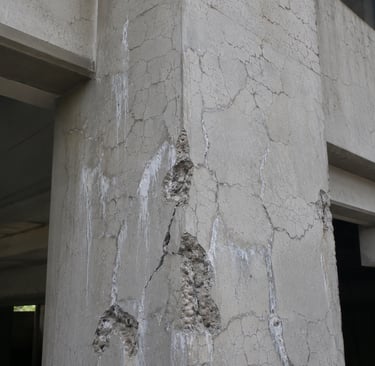
Fatigue Spalling:
Repeated stress cycles, vibrations, or excessive loads can cause fatigue failure in metal, resulting in cracking and spalling.
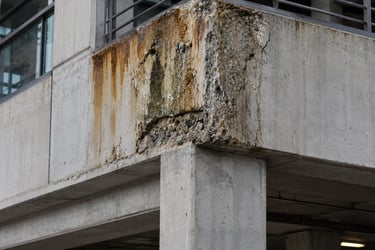
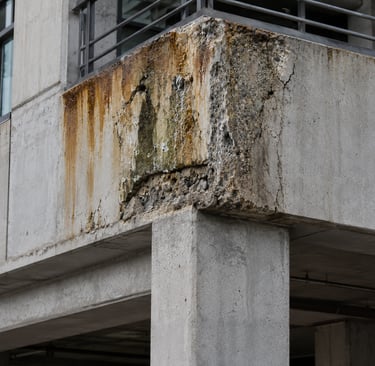
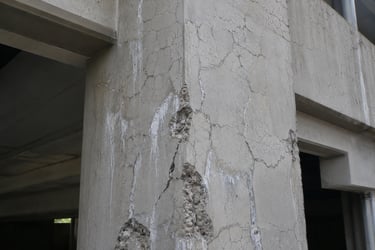
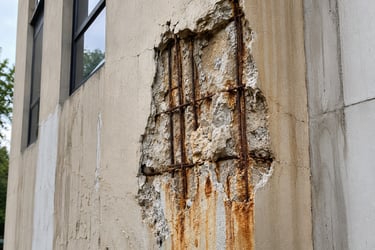
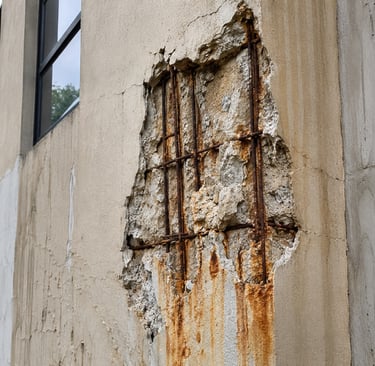
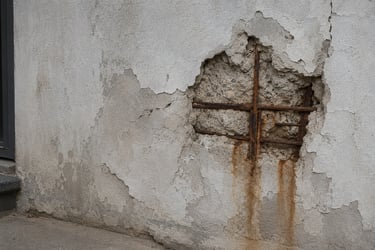
Corrosion-Induced Spalling:
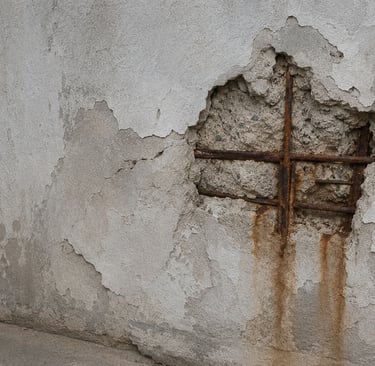
Reinforcing steel within the concrete can corrode due to exposure to moisture and oxygen, leading to rust expansion and spalling.
Masonry Spalling
Weathering:
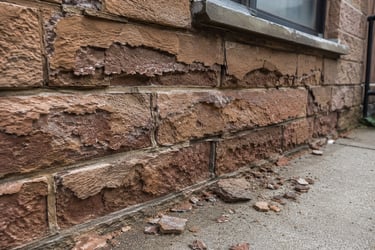
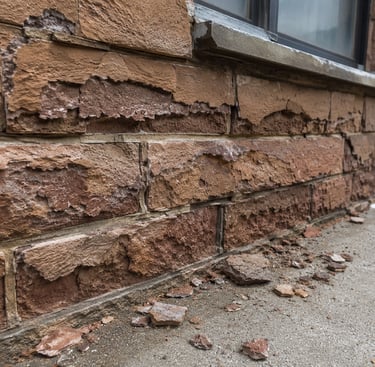
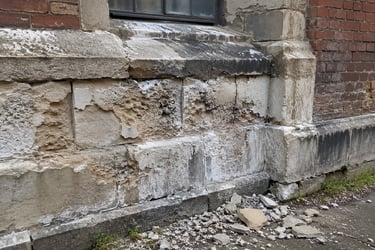
Exposure to the elements, such as rain, wind, and freeze-thaw cycles, can cause erosion and spalling of masonry materials like brick or stone.
Chemical Attack:
Similar to concrete, masonry can be affected by chemical reactions, including acid rain or exposure to corrosive substances, resulting in spalling.
Structural Overload:
Excessive loads or improper distribution of weight can cause stress on masonry structures, leading to cracks and spalling.
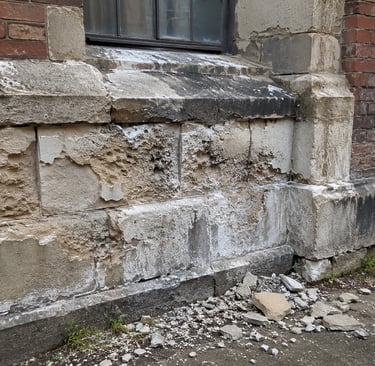
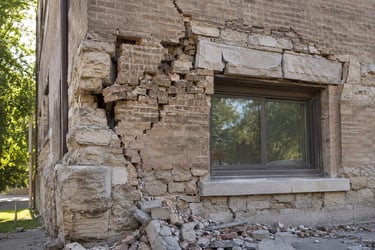
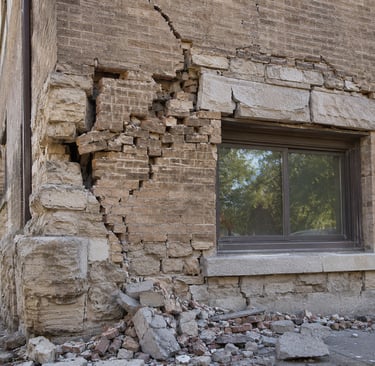
It's important to note that these are general categories of spalling causes, and specific situations may involve a combination of factors. Regular maintenance, proper material selection, and preventive measures can help mitigate spalling issues. When dealing with spalling problems, seeking the assistance of a skilled professional like Lance Luke can ensure that the repairs are carried out with precision and efficiency, leading to long-lasting and reliable solutions.
LANCE LUKE
National Building Expert and Spalling Repair Expert
Currently, Mr. Luke conducts webinars on spalling repair and other construction-related topics. Through his website, he offers expert guidance and advice to clients seeking solutions for spalling-related challenges. Moreover, he has served as a consultant to national media outlets, providing valuable insights and expertise on the impact of extreme weather events on buildings and spalling systems.
As a distinguished Spalling Repair Expert, Mr. Lance Luke brings unparalleled expertise and a wealth of experience to his clients, delivering reliable solutions and comprehensive knowledge in the field of spalling repair and maintenance.


Mr. Lance Luke is a Spalling Repair Expert with over 45 years of experience in the construction industry, specializing in spalling repair techniques and risk management. Throughout his career, he has provided valuable guidance and consultation to property owners, businesses, and government agencies on a wide range of spalling-related issues, including maintenance, repair, and restoration.
In addition to his extensive consulting background, Mr. Luke is a highly sought-after speaker and author, focusing on topics related to spalling repair, construction, and building safety. He has authored numerous articles published in over 750 local and national print and electronic media outlets. Mr. Luke has also been featured as a guest expert on renowned national media shows such as Times Square Today, Hollywood Live, and the Brian Tracy Show, where he shared his expertise on spalling repair and related subjects.
With his vast experience and knowledge, Mr. Luke has served as an expert witness for the state of Hawaii DCCA RICO Contractor's License Board for over 15 years. He has provided expert testimony in various legal cases involving spalling repair disputes, including claims pertaining to spalling defects and damages.



Lance Luke in World of Concrete show



Watch his exclusive webinars and learn more about Lance and his expertise in Spalling Repair





Explore Lance Luke's Exclusive Books and Articles and Deepen Your Knowledge on Spalling Repair
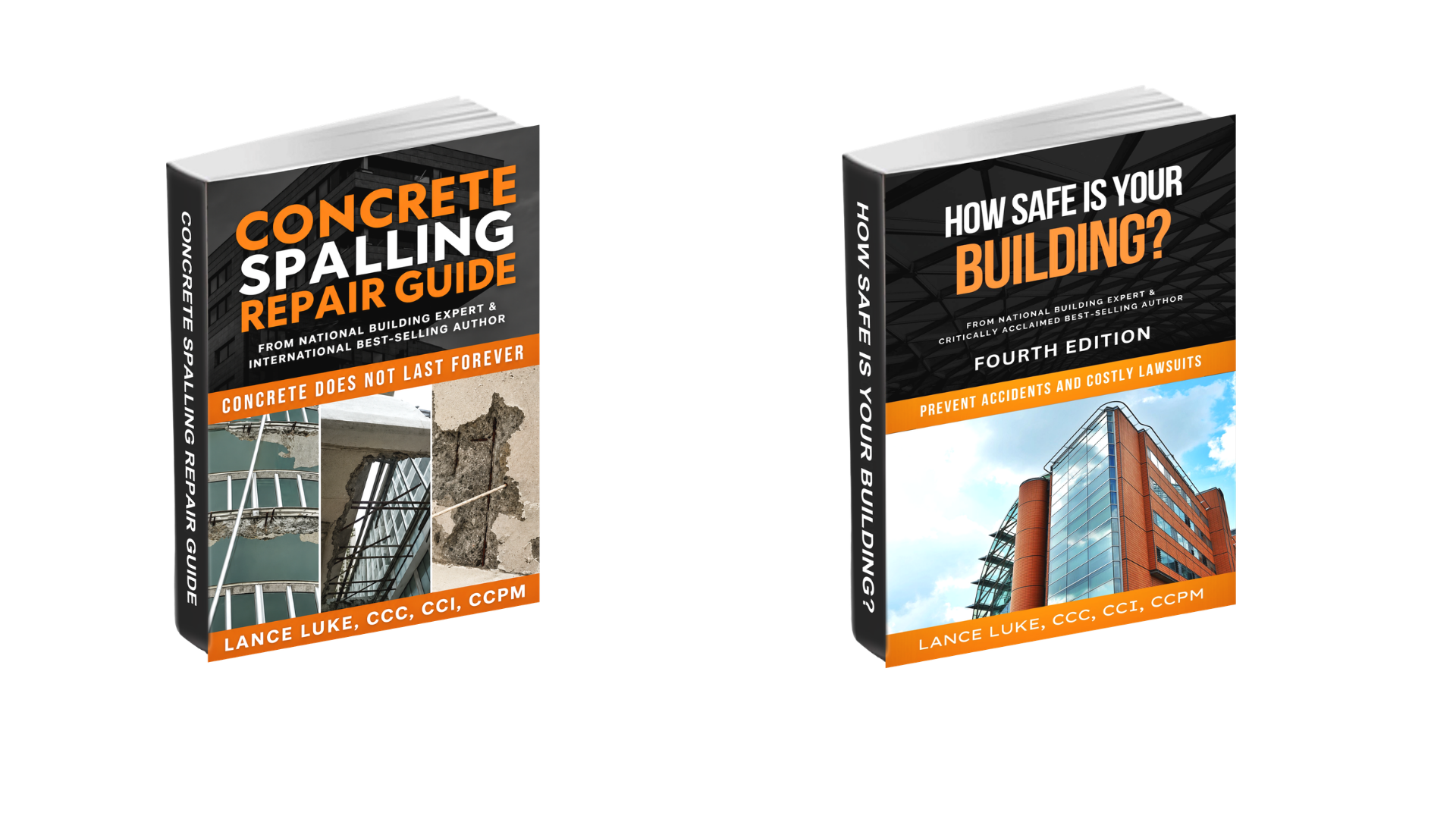
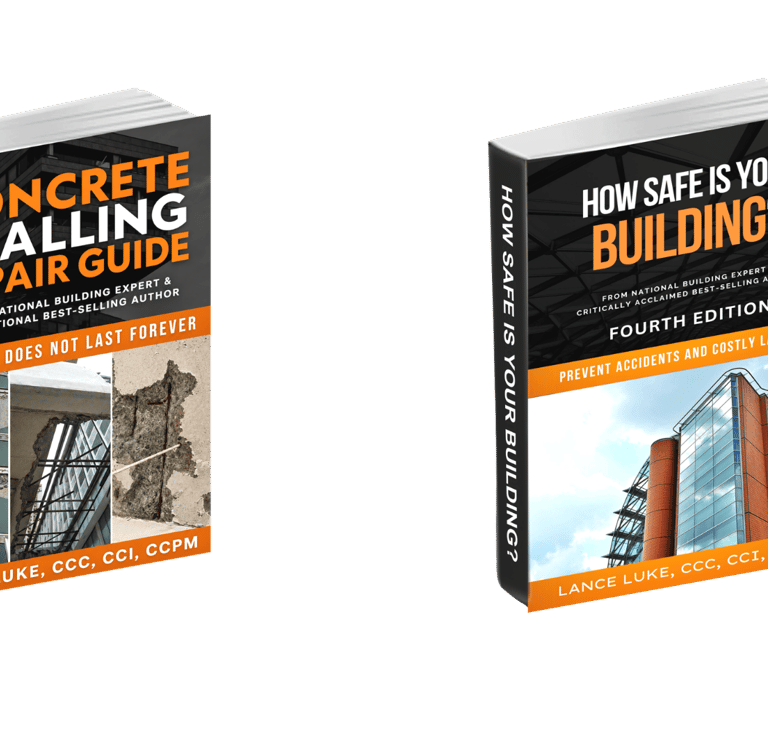
Read now and gain a keen awareness of spalling, enriching your understanding of the world around you.
Discover the level of safety in your building! Prevent Accidents And Costly Lawsuits
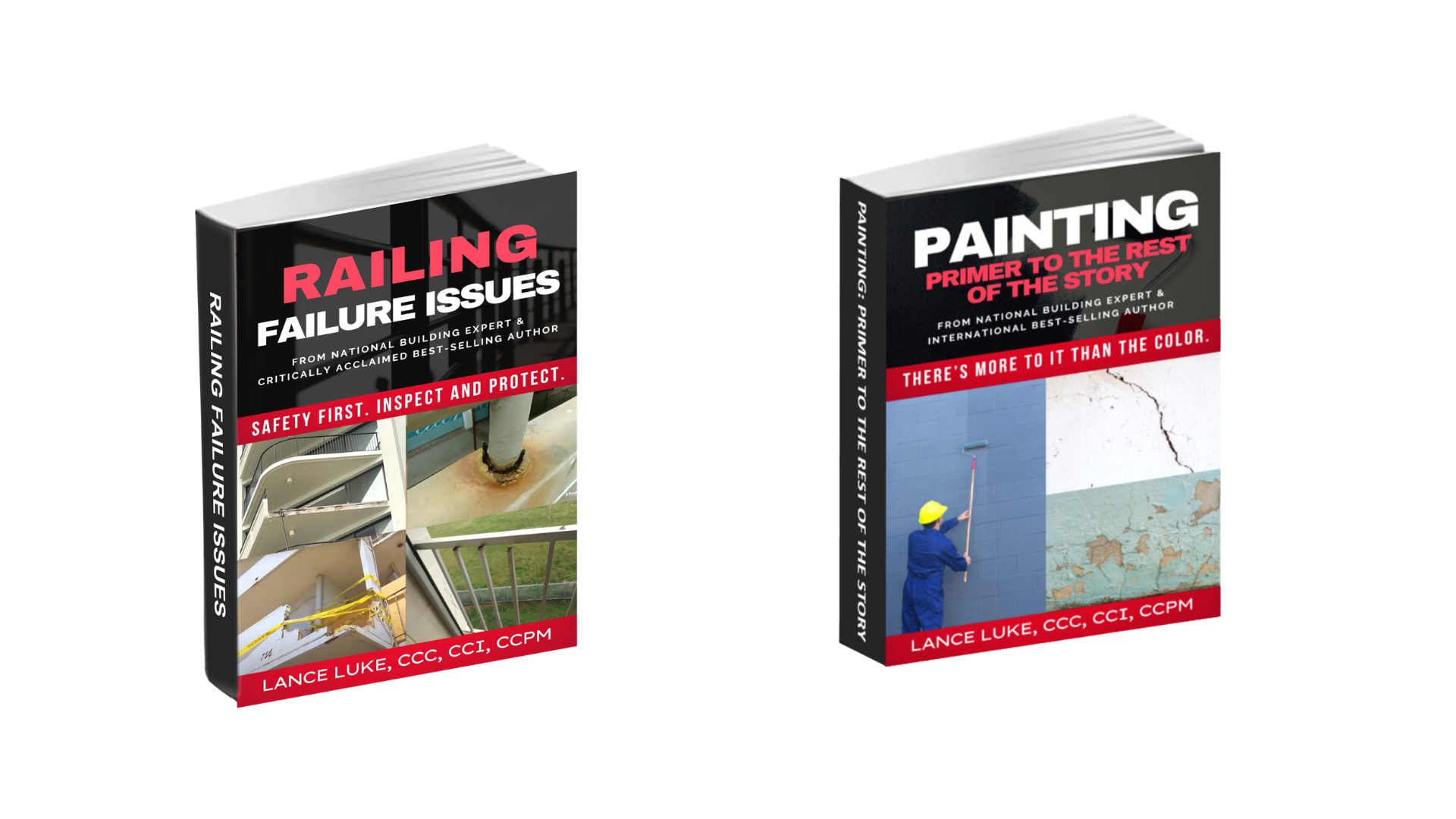
Don't fall for faulty railings!
Don’t paint over serious problems!
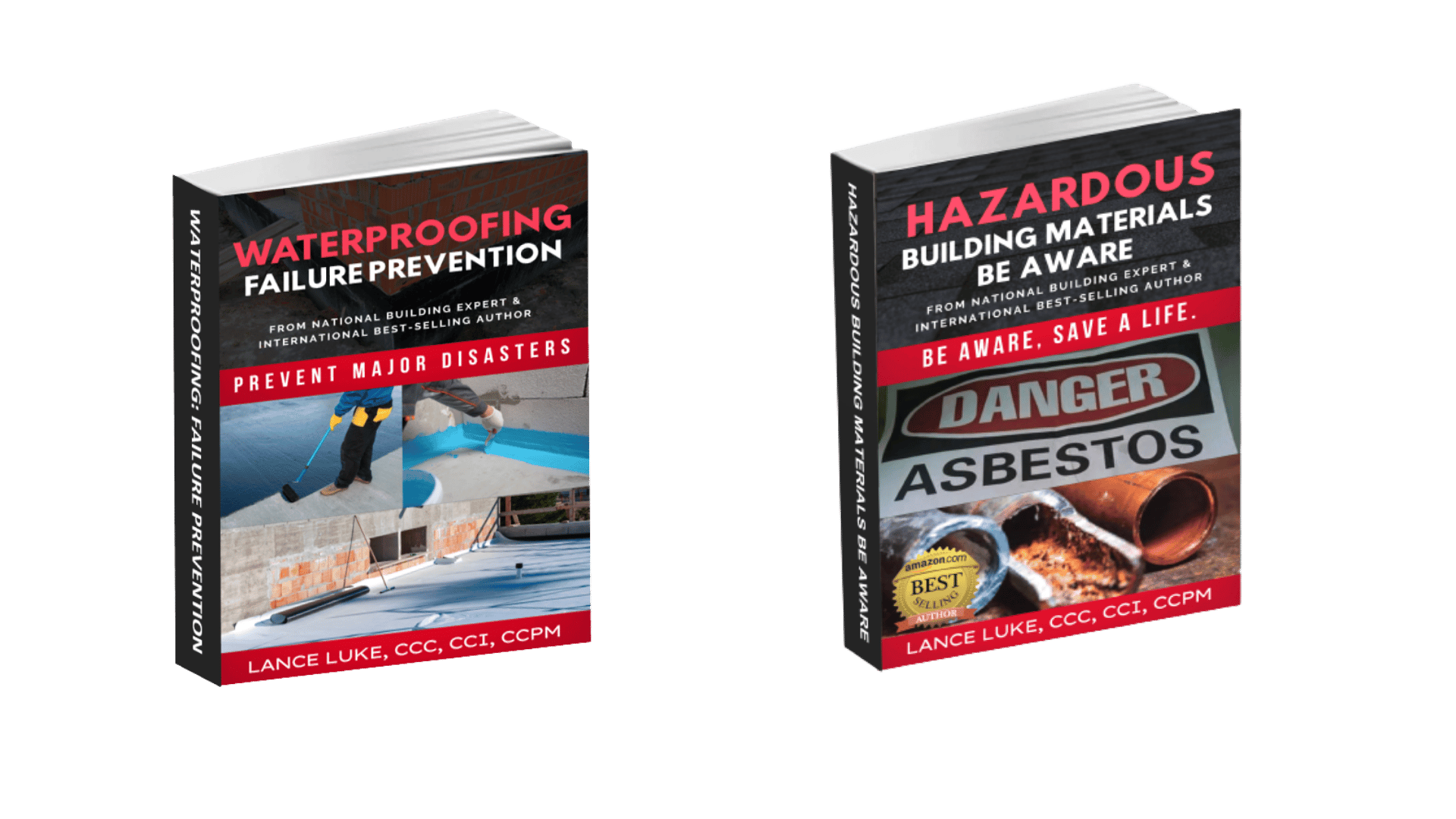
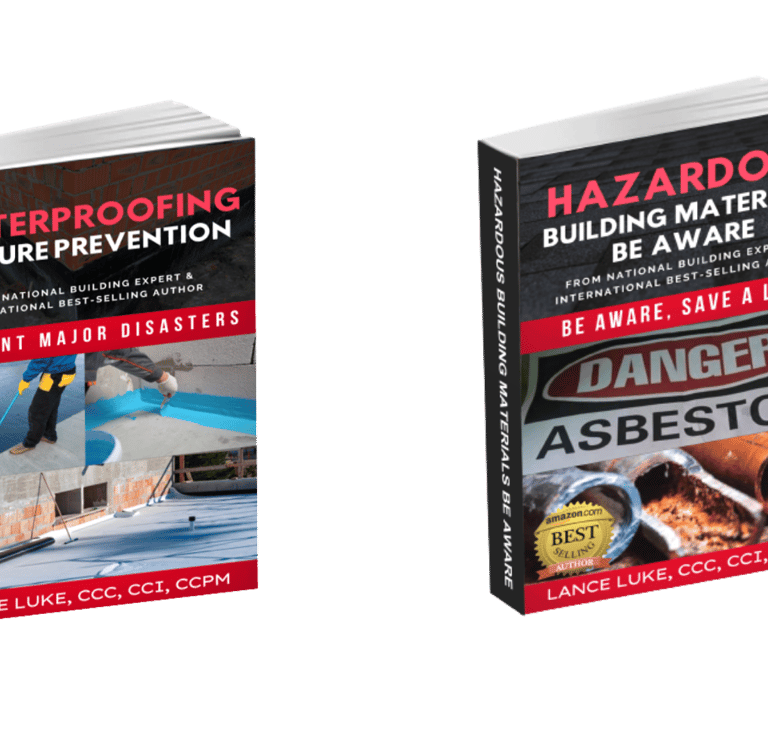
Don’t let water ruin your foundation!
Don’t let hidden hazards put your building at risk!
Here's Your FreeBook on Building Safety for You and Your Family!


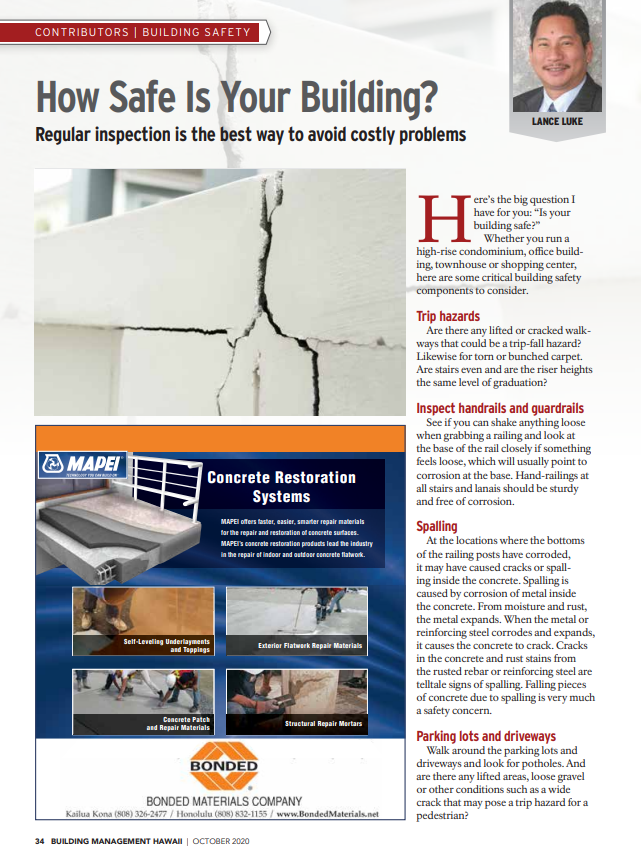
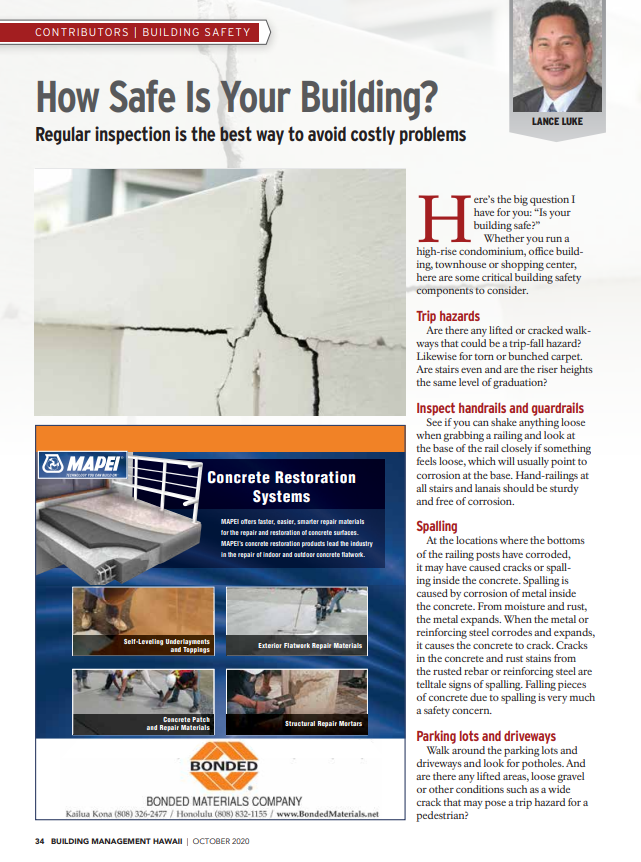
THE BIG QUESTION: How Safe Is Your Building?
14 Common Area Concerns (The Word According To Luke)

VARIOUS SPALLING CONDITION
Introducing our Services
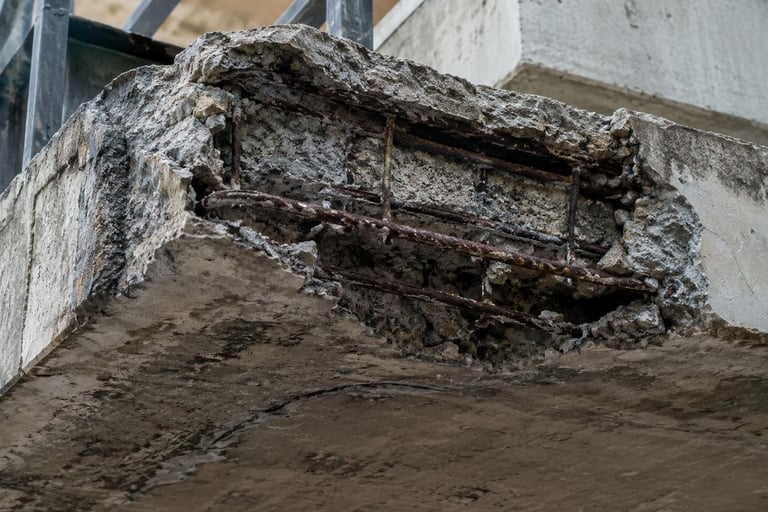
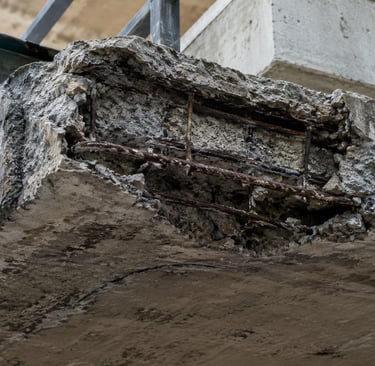
Leading Edge Spall
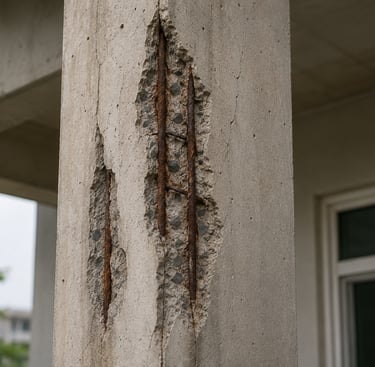
Leading Edge Spall typically begins with the penetration of water or moisture into the concrete, which can happen through cracks, joints, or porous areas. When this water reaches the reinforcing steel within the concrete, it can cause the steel to corrode. As the steel rusts, it expands, exerting pressure on the surrounding concrete, leading to cracking and eventual spalling.
Full Depth Spall
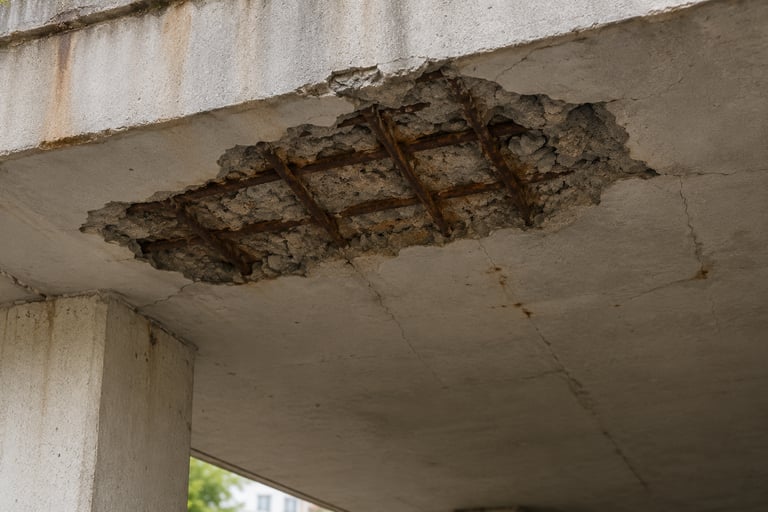
In the case of full-depth spall, the damage extends entirely through the thickness of the concrete, from the surface to the reinforcement layer. This type of spalling is considered more severe than surface spalling, where only the top layer of concrete is affected. Full-depth spalls can compromise the structural integrity of a concrete element, posing safety risks and requiring prompt attention.
Partial Depth Spall
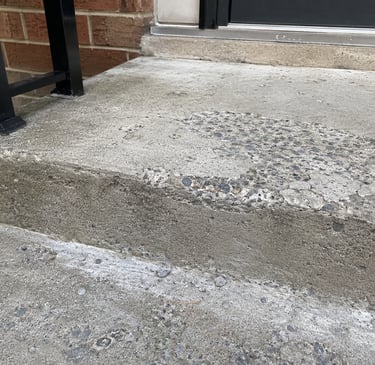
Partial depth spalling refers to a type of concrete deterioration that occurs when the surface layer of a concrete structure, such as a road or a bridge, starts to break off or chip away in small pieces. It is a common problem in regions with significant temperature variations and exposure to de-icing salts or other corrosive substances.
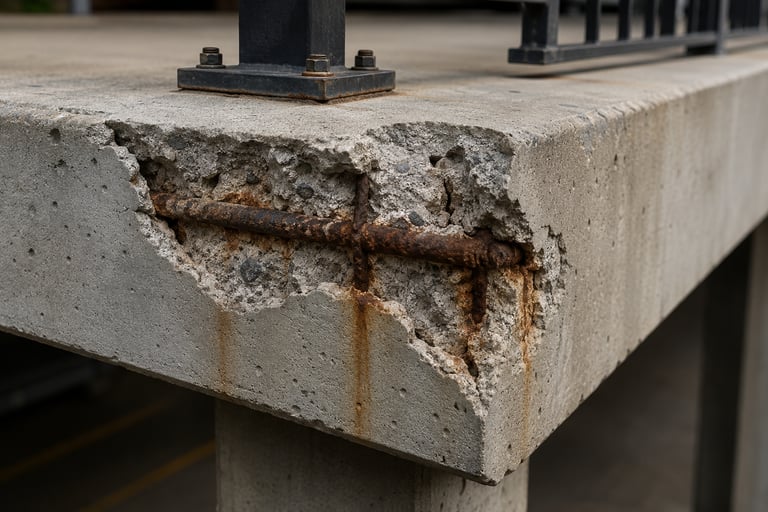
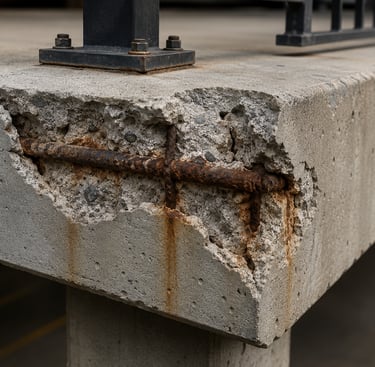
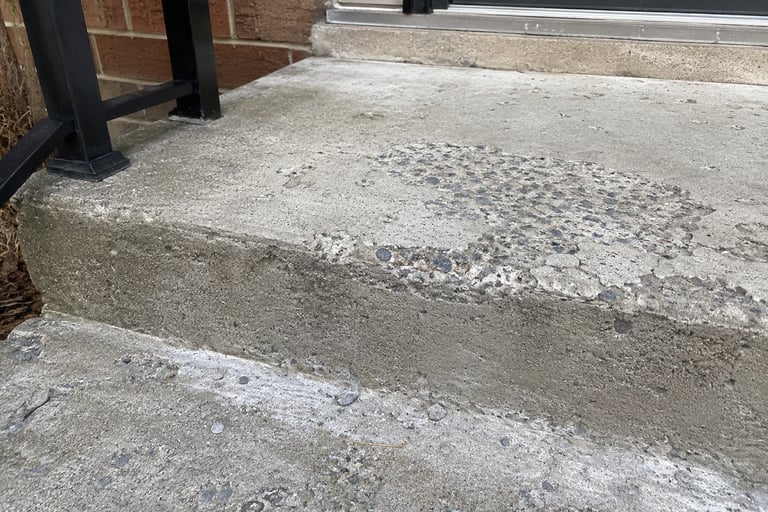
Vertical Spall
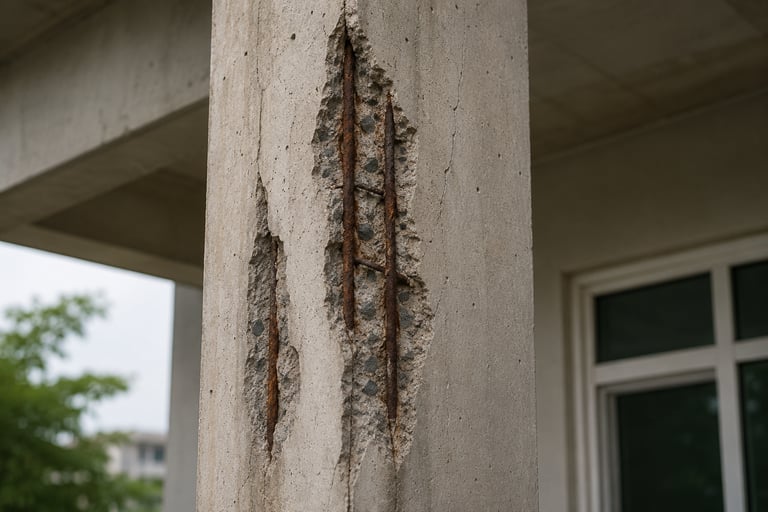
Vertical spalling is a common issue in aging structures and can compromise their structural integrity if left unaddressed. Proper maintenance and repair are essential to prevent further damage and ensure the safety and longevity of the affected structure.
Horizontal/Overhead Spall
Horizontal/overhead spalling refers to the phenomenon where fragments or chips of concrete dislodge and fall from the underside or upper surface of a structure, typically caused by the deterioration of reinforcing steel or other structural elements. It is a form of concrete deterioration that can occur due to factors such as corrosion, freeze-thaw cycles, or excessive loading.
CONCRETE INSPECTION


SPALLING REPAIR TECHNIQUES


SEALANT AND WATERPROOFING

PREVENTIVE MAINTENANCE ADVICE
Their certified technicians, inspectors, and engineers, trained by the National Fire Escape Association and Academy, provide expert fire escape services. All work is safely performed by licensed EPA Renovators.